A Slow Evening with One Bright Planet
A slow evening with one bright planet makes a planet’s apparent motion easier to notice, with a simple observing plan and a clear way to record what changes.

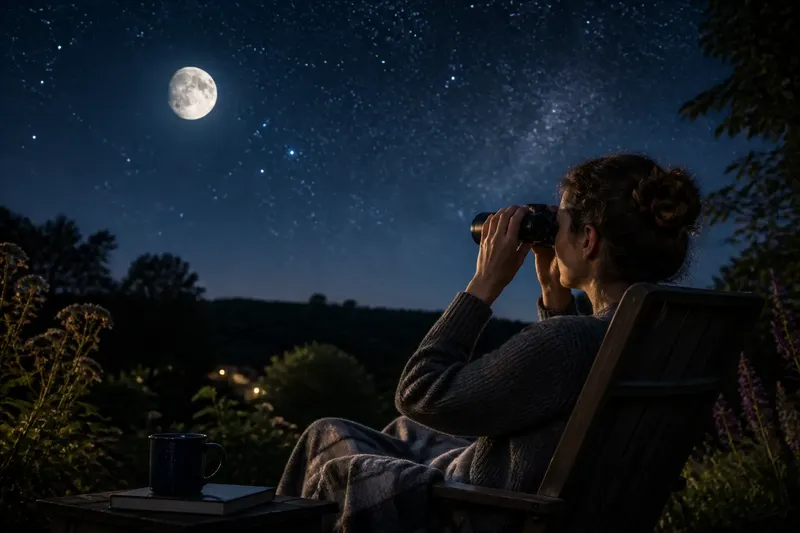
The planet is still above the roofs when you step outside to take the bins in. A slow evening with one bright planet can turn that passing glimpse into a closer look at how the sky appears to move. Rather than tracking its position against garden landmarks, follow the planet’s relation to nearby stars and notice what changes as Earth turns.
Which planet can you see tonight?
Visibility changes through the year. Venus and Jupiter can be conspicuous when they are above the horizon, but neither is visible at every hour or in every season. Check a current sky map before heading out; Stellarium, for example, can show a planet’s position from your town and indicate when it rises or sets.
Use the app to identify a suitable planet and find the direction to face. Then put the screen away or dim it, so it does not compete with the sky. If the planet is close to the horizon and your view is blocked, choose a different evening or an object that will be higher after dusk.
- The planet is visible in twilight: Check whether the sky is clear in its direction; if it is, begin looking as twilight deepens, and if not, choose another evening.
- The planet will be higher after dusk: Confirm its position in the sky map; if it clears nearby obstructions, plan a relaxed session, and if not, find a safe open location.
- Cloud is forecast: Check the local forecast shortly before going out; if there are clear intervals, keep the plan flexible, and if the sky is covered, postpone the observation.
How can you compare the planet with the stars?
Choose a spot where you can see the planet and some of the stars around it. The point is to watch the planet’s apparent position against the background sky, not to compare it with a roofline or another fixed object. A safe garden, quiet park or open public space can work; avoid places where looking upwards would leave you in the way of traffic or other people.
At your first look, note the time and sketch the planet’s position relative to two or three nearby stars. If you do not know their names, mark their arrangement with simple dots. A free sky map can help identify them, but a rough drawing is enough to make the later comparison.
After a comfortable interval, look again from the same place and update the sketch. The planet will appear to have shifted against the stars as Earth turns. Over a short interval the change may be subtle, so keep the drawing plain and avoid treating a small difference as a precise measurement.
Say you identify Jupiter in a clear patch of sky and sketch it beside three visible stars, marking the time. Later, you return to the same spot, find the same stars and add Jupiter’s new position. If the planet’s apparent relation to the stars has changed, the two sketches show the direction of that shift; if clouds have hidden the stars, record that the comparison could not be made and try again on a clear evening.
What should you bring?
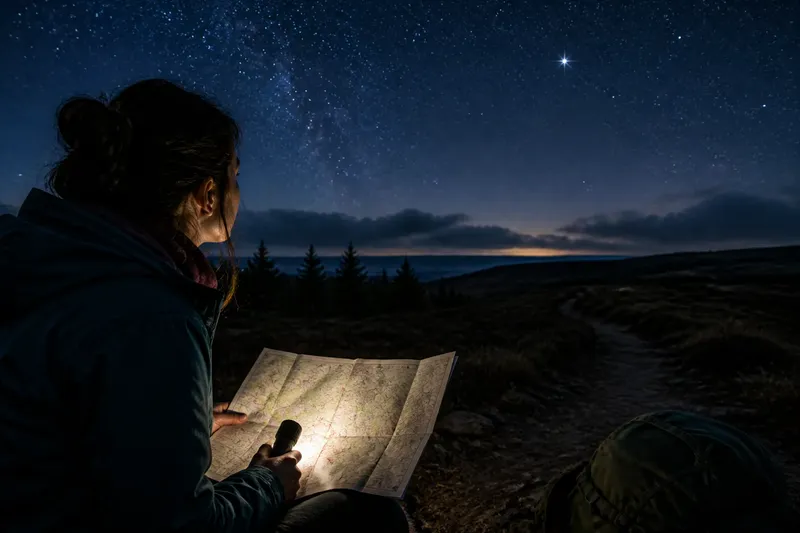
A notebook and pencil are useful because paper stays readable without lighting up your face. A phone with a dimmed screen can serve as a sky map or note pad, but check the planet’s identity before you begin and avoid repeatedly turning the display on. A warm layer and a comfortable place to stand or sit make it easier to give the sky your attention.
Do not worry about naming every star. The aim is a repeatable comparison, not a small examination conducted outdoors. A few clear marks and the time are more useful than a crowded page of uncertain labels.
What if the stars are difficult to see?
Can you observe through thin cloud?
A bright planet may remain visible through thin cloud, while nearby stars become harder to pick out. If you cannot recognise the same stars on the second look, note the obstruction instead of claiming a shift.
What if there are too few visible stars?
Try a darker, safely accessible spot or choose a clearer evening. If the planet is visible but you cannot see enough nearby stars to compare its position, you can still enjoy the view, but save the comparison for another session.
Can a phone app show the movement?
Yes, a sky map such as Stellarium can display the planet’s changing position and help identify nearby stars. Use it to check your observations, not as a substitute for looking up; screen brightness can make faint stars harder to see.
Will the planet move against the stars over one evening?
Its apparent position can shift as Earth turns, though the difference may be small over a short interval. Record the time and keep the sketch simple; a modest change is still a useful observation.
How should you read the result?
Cloud, haze and light pollution can hide the stars needed for comparison. If the background pattern is not clear, write down what you could see and leave the conclusion open. A careful note of uncertainty is better than a confident guess.
Also distinguish apparent movement across one evening from a planet’s slower motion against the stars over longer periods. During a short session, the changing view is chiefly an effect of Earth’s rotation. The planet’s own position among the stars changes too, but that is easier to follow by comparing observations made on separate evenings.
For a slow evening with one bright planet, the useful record is modest: the object, the time and its relation to a few stars. If the sky does not cooperate, keep the sketch and try again; the stars make a better reference than a phone screen, provided they are visible.